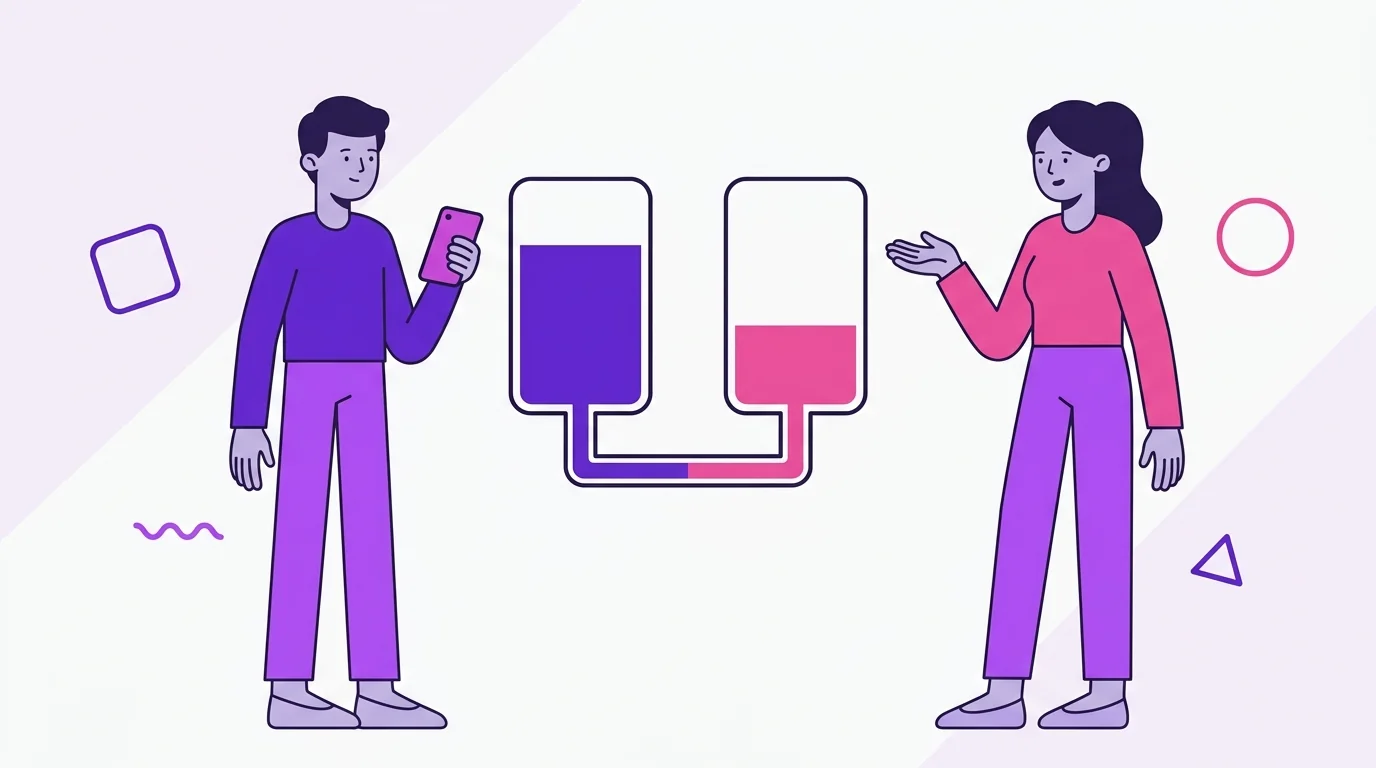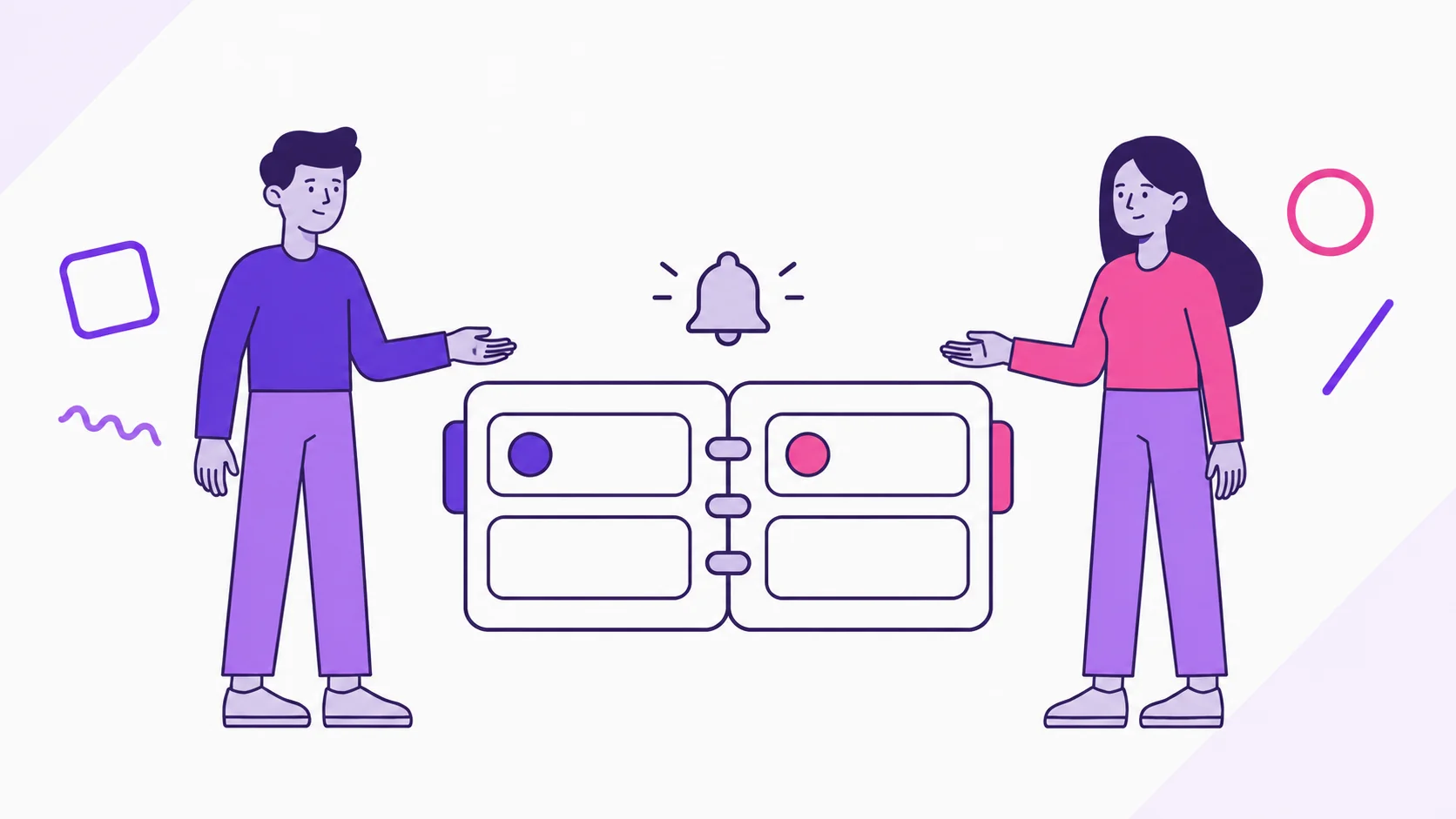
Financial mental load is the work of remembering, tracking, and following up on bills, beyond providing the money to pay them. Share it by giving each household commitment a clear owner through payment confirmation. That includes setting reminders and handling unfinished tasks.
Rent is split, but the payment portal sends messages to only one of you. The internet promotion ends, and the same person notices the higher charge. Even when both partners contribute fairly, the financial mental load may still sit with just one of you.
Why doesn’t splitting bills split the financial mental load?
A dollar split tells you how much each person contributes, while a workload agreement tells you who checks the statement, notices a deadline, and follows up when something doesn’t go through or needs another call to the provider. Those are separate decisions, whether you’re married, living together, or managing a few shared expenses.
In her research on cognitive household labor, sociologist Allison Daminger identifies anticipating needs, finding options, making decisions, and monitoring results. Applying that lens to household bills is a practical suggestion here, not a claim about how many couples handle money this way.
Look at one bill from arrival to completion. Who knows where the statement is? Who checks whether the amount changed? If the bank shows a payment as pending, who checks again? These questions make the work visible without turning the conversation into a scorecard.
Different incomes may still call for different contributions. Our guide to splitting bills when incomes differ covers that decision. Paying a larger share doesn’t automatically determine who should do the tracking.
How do you make the financial mental load visible?
Start with the bill, amount, and due date, then add who follows it through. The CFPB’s bill calendar guide recommends gathering monthly bills, recording amounts and deadlines, and keeping the calendar somewhere you can check weekly. For a couple, the extra question is who handles each next step.
Include rent, utilities, shared subscriptions, and less frequent commitments such as an annual renewal, remembering that a calendar with dates but no follow-up agreement can still leave one partner doing all the checking.
Hypothetical example: your internet bill is $80, split $40 each. One partner sees that a promotional rate is ending, contacts the provider, and confirms the next charge. The $40 split may be fine. The calls and follow-up need their own place in the agreement.
Use a note or calendar both of you can access, with enough detail to find the next step when a statement hasn’t arrived or a payment needs checking, but don’t put banking passwords in the bill list. Each person should use their own authorized access to banks and service providers.
How can couples divide bill tracking in four steps?
- List the shared commitments.
- Choose who follows each one through.
- Define what finished means.
- Agree on backup help.
The person taking a bill also sets their own reminder, while the backup steps in for an agreed absence or a problem rather than quietly repeating every check and carrying the job a second time. These are fields for your agreement, not a task-assignment feature in dividi.
| Agreement field | Hypothetical example |
|---|---|
| Bill | Internet, $80, due October 10 |
| Who handles it | Alex, from statement review to confirmation |
| Checkpoint | Review on October 7 |
| Finished means | Verify payment, then update the shared record |
| Backup | Jordan, after an explicit handoff |
Choose the checkpoint around your payment method and the time you might need to fix a problem. It’s not a replacement for the provider’s due date. Rent due on the first and utilities due later may need different checkpoints, especially when paydays don’t line up with both.
A handoff should name what’s still open: “The statement is correct, but the payment isn’t submitted. Can you take it through Friday?” Wait for the other person to confirm. Silence leaves the job ambiguous.
Should you keep fixed roles or rotate responsibilities?
Fixed roles reduce handoffs, while rotating helps both people learn the process; neither is automatically fairer when work schedules, familiarity with the providers, and the time each person has available can change from one month to the next. Compare the actual effort alongside caregiving, study, and other household responsibilities, rather than counting the number of bills each person has.
| Fixed responsibilities | Agreed rotation |
|---|---|
| Example: Alex handles electricity; Jordan handles internet | Example: They swap those jobs next billing cycle |
| Benefit: Familiar process, fewer handoffs | Benefit: Both learn the steps |
| Risk to watch: One person becomes the permanent expert | Risk to watch: Ownership gets unclear during the switch |
| What helps: Backup instructions | What helps: A list of unfinished items at handoff |
Try one billing cycle before changing the whole arrangement, because a disputed charge may take several calls while another bill takes minutes, leaving the financial mental load uneven even when each person has the same number of bills. Redistribute when the work changes, even if the dollar split stays the same.
The goal is shared responsibility you can both understand. No one needs to become the other’s supervisor.
Does autopay remove the need to follow up?
Autopay can remove the manual payment step, but someone still needs to monitor the amount, timing, and available balance. The CFPB’s guidance on automatic payments, reviewed August 28, 2026, explains why tracking those details still matters, including the risk of fees when funds are insufficient.
The same guidance distinguishes a company withdrawing money under your authorization from recurring bank bill-pay, where your bank sends the payment. Check which arrangement you use. “It’s automatic” doesn’t tell the other person what to look for if something goes wrong.
Hypothetical example: rent of $1,600 is scheduled from a checking account, and the household calendar shows the next paycheck arriving afterward. The person tracking rent checks available funds ahead of the withdrawal and raises any gap early. Autopay cannot resolve that timing mismatch by itself.
Choose someone to monitor automatic bills just as you would for manual payments. A scheduled payment is a step in the process; verify the outcome before recording the bill as paid.
How do you share the financial mental load without daily check-ins?
Walk through the first cycle together, showing where the statement arrives, how to contact the provider, and which issue is still unresolved, so the person taking over has enough information to finish without asking for instructions at every step. Then let the person taking over run the next cycle, including the reminder they use to begin.
Agree on one return point: “If it isn’t sorted by Wednesday, let me know so we can adjust.” That makes room for help without a daily check-in. For language that keeps the discussion calm, see talking about money without blame.
Different methods can be fine. One person may use a calendar alert while another checks a list at a set time; judge the arrangement by whether the commitment gets handled and both people can understand its status, rather than whether their methods match. If one partner is still reminding everyone, revisit the handoff.
Frequently asked questions
Should the lower earner handle all the household bills?
Not automatically. Money contributions and administrative work are separate agreements. Consider time, workload, and other responsibilities as well as income. Revisit the arrangement when either person’s circumstances change.
How do we share the financial mental load while learning?
Start with one straightforward bill. Walk through where the statement arrives, what to check, and how to confirm completion. Let the person taking over own the reminder for the next cycle, with a clear way to ask for help.
Do we need a joint checking account?
No. You can keep separate bank accounts while sharing a household bill list. Agree on who follows each expense through and which account funds it. Use only the access and permissions each person is authorized to have.
Does dividi pay bills or verify bank payments?
No. Payment status in dividi is entered by the user. Check the payment with your bank or service provider before marking the bill as paid. The agreement about who tracks each task stays between you and your partner.
How can dividi make shared bills easier to see?
In dividi’s Joint Account, both partners can view shared bills and their recorded paid or unpaid status. After checking the payment outside the app, Mark as paid updates the shared record so both of you can see its status.
Start sharing the financial mental load with one bill that currently depends on reminders from just one person. Agree on who follows it through, add the bill, and define how you’ll confirm completion. Download dividi to keep that shared view together. For the thinking behind these practical guides, read why we created the dividi blog.