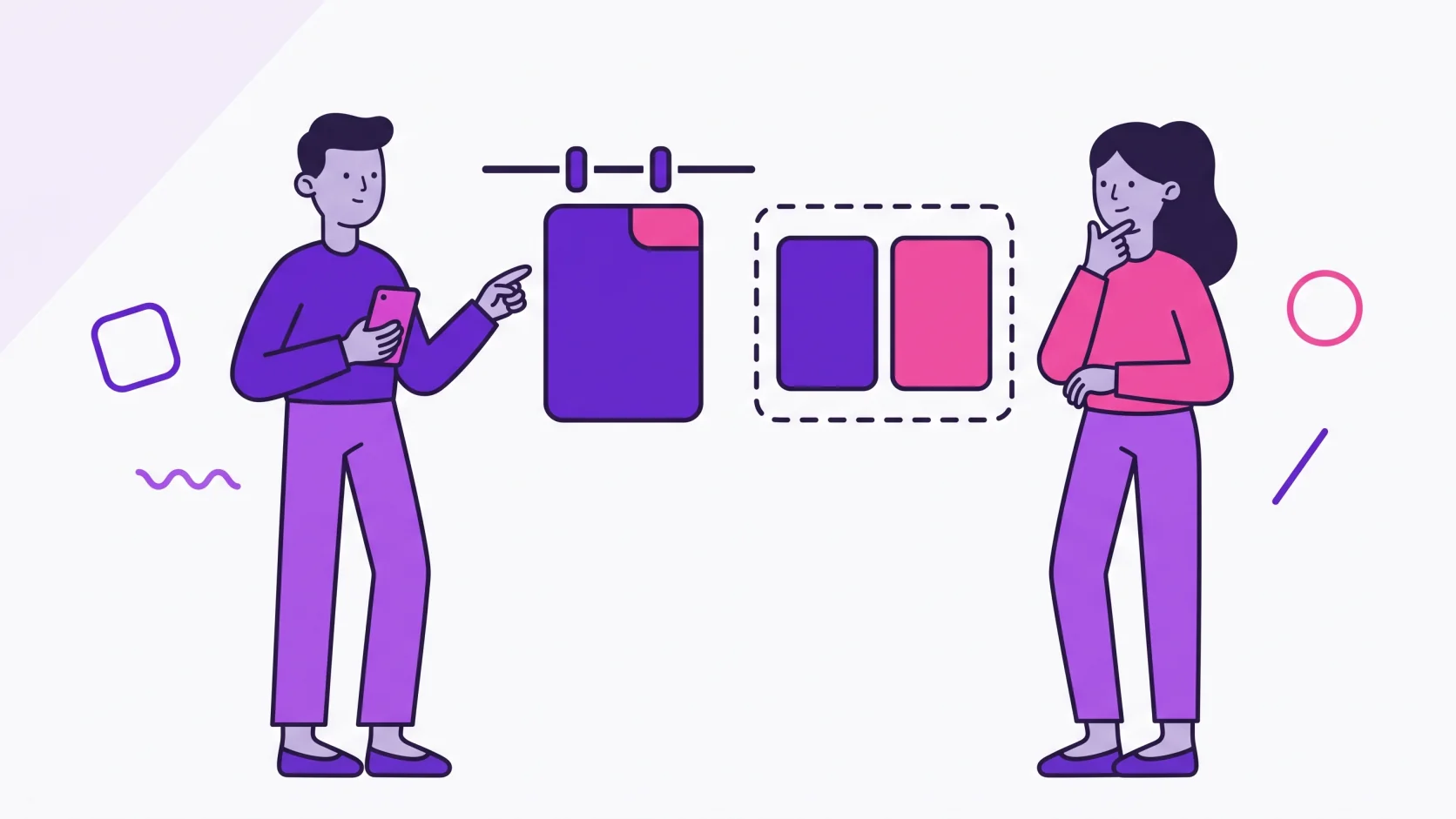
Noh and dividi answer different questions. Noh is a real joint account: the money you share as a couple flows in and out of it, with payments and a shared card. dividi never touches the money — it organizes two people’s month on top of the accounts you already have.
If you are reading this, you have probably felt both pains. One is operational: which account pays the rent, who covers groceries, the transfer one of you sends the other every week. The other is about visibility: how much is already spent, what is left, whether the month is on track, and the conversation that stalls because each of you has a different number in mind.
This comparison treats both tools with the same care and picks no winner. Noh fees and dividi pricing were reviewed on official pages in September 2026 and can change — verify before you decide. This is educational information, not financial, legal or investment advice.
What is Noh?
Noh is a digital joint account built for couples, run by Noh Pay, a company based in São Paulo, Brazil. Its stated pitch on the official site is to be “the only account made for two”: both partners get identical access, with no primary and no secondary holder, and use the account for instant transfers, bill payments, a prepaid card, Apple Pay and Google Pay.
To open one, each person must be over 18, hold a valid Brazilian tax ID (CPF), submit an ID document and a selfie, and be “in a relationship”, according to the help center. The money, the same help center says, is held by Dock, the payment institution that provides the account infrastructure.
One thing to say up front for readers in the United States: Noh is a Brazil-only product. If you cannot open it, read “Noh” here as the model it stands for — a joint account with a shared card, the same choice you would face with a joint checking account or, where an issuer offers one, a jointly held credit card at your own bank. The trade-offs below travel well; the brand does not.
The account works in two formats, and this matters most for the comparison. In Joint Balance (Saldo Conjunto), everything deposited is available to both of you, with no distinction of who put it in.
In Separate Balances (Saldos Separados), each partner keeps their own balance inside Noh and payments are split on the spot: Noh debits each person’s share in the proportion you choose — 50/50, proportional to income, or adjusted per payment. You can switch formats in the app, as the Noh blog explains.
On top of that sits an organizing layer. The Nohs Organizer splits the balance into pockets for Day to day (a cap for recurring costs like rent and groceries), Objectives (saving toward a future goal) and Investments, offered with the brokerage Warren. Only the last one earns a return, as the help center makes clear.
CategorizaNoh sorts spending automatically into five categories you can correct, and open banking (Brazil’s Open Finance) lets you connect each partner’s other banks to see, in the same app, the money that stayed outside Noh, and to fund the account from them.
Since November 2025, Noh also offers a Visa Infinite credit card: two cards, one statement and a single credit limit for the couple, set from both partners’ history, existing debt and income commitment. Every purchase triggers a notification to the other person. Startups covered the launch, and Noh’s own help center notes that initial limits are still being calibrated.
In short: with Noh, the couple’s money lives in the app. That is its strength, and it shapes everything else in this comparison.
What is dividi?
dividi is a financial organization app for two people who share a life. It has a personal account and a Joint Account: each of you logs your own bills, and for anything shared, both of you see the same numbers.
A bill in the Joint Account can be marked as shared and is split by the percentages you agreed on when you created the account — 50/50 or any other split that adds up to 100%. At the end of the month, the app works out how much one of you needs to transfer to the other and records that transfer to settle up.
Around that sit the pieces a shared month usually asks for. A Budget on the 50-30-20 rule shows an On track, Watch out or Over budget status; goals carry a target amount and deadline; cards work as statement organizers; and installments, recurring bills and Copy bills handle the turn of the month.
What dividi does not do matters as much as what it does: it is not a bank, holds no money, pays nothing and connects to no financial institution, as the Security page states. The transfer that settles the month still goes through your own bank, Zelle or whatever you already use. The app is the layer of visibility and agreements on top of what exists.
Who is each one for?
Neither is better in the abstract. They start from different models of shared money.
Noh tends to fit better couples who are ready to move household money into a new account, either as one pooled balance or as separate balances with automatic splitting. If you want rent, groceries and the bills paid from the same place, a card that belongs to both of you with one statement, and categories and notifications that happen on their own, that is what it was built for.
It is also the natural pick if you would rather the app read the statement than type each expense.
The cost of that design is operational and contractual. Both of you open an account with identity verification, the money has to be inside Noh for the account to work, and there is a monthly fee. On the card, the debt belongs to both: “the credit limit is joint, and so is the responsibility for any debt”, per the help center.
In the United States, a jointly held credit card works the same way: each account holder is responsible for the full balance, as the CFPB explains.
dividi tends to fit better couples who want to keep the money where it already is — separate accounts, a hybrid setup, or even a joint account at the bank you already use. The shared view sits on top: household expenses split by the agreed percentage, what each partner covered, the month-end settle-up, budget, goals, cards and installments.
It fits especially well if you do not want to connect any bank to any app.
The cost of that design is manual entry: what nobody logs, the app does not see. And the settling transfer happens outside the app, in your own bank.
The comparison of joint, separate or hybrid accounts helps you settle the model before the tool — and that decision weighs more here than in any other comparison.
How do Noh and dividi compare, category by category?
| Criterion | Noh | dividi |
|---|---|---|
| Product model | Digital joint account with a couple’s card | Ongoing financial organization for two |
| Where the money lives | In the Noh account, a payment account held by Dock | In the accounts you already have; the app holds and moves nothing |
| Participants | Two people in a relationship, with equal access | Two people per Joint Account, with permissions per guest |
| Personal spending | Separate Balances keep each person’s money inside Noh; other banks come in through open banking | Personal account separate from the Joint Account, in the same app |
| Splitting | Automatic at payment: Noh debits each person’s share in the chosen proportion | Percentages agreed in the Joint Account, 50/50 included |
| Settling up | Not needed: the split is debited on the spot | Suggested transfer with the amount calculated |
| Card | Two Visa Infinite cards, one statement, one limit for the couple | Card as a spending organizer, no number or security code stored |
| Payments | Yes, from the account itself (instant transfers and bill pay in Brazil) | No; the app pays nothing |
| Categories | Automatic (CategorizaNoh), with manual correction | Chosen by you when logging the bill |
| Budget | Day-to-day pocket with a spending cap | Budget on the 50-30-20 rule with On track, Watch out and Over budget |
| Goals | Objectives pocket, which holds the money | Goal with target amount, deadline and progress; holds no money |
| Investing | Investment pocket with Warren | Not available |
| Bank connections | Open banking to connect the couple’s banks | None: nothing is connected to a bank |
| Notifications | Every card purchase, to both partners | Invite and transfer; due-date reminders on Premium |
| Pricing | R$ 24 per month per couple after 7 days; credit card R$ 34 per month, waived above R$ 5,000 on the statement | Free up to 6 months or 120 operations; Individual $1.99/mo or $14.99/yr; Duo $2.79/mo or $20.99/yr |
| Ads | None | None |
Where does the money live? Privacy and protection
Here is the difference that shows up least on the screens and weighs most on the decision.
With Noh, the money goes into a payment account. In Brazil, that is a specific category: payment institutions move funds inside a payment arrangement without being banks. Brazilian law (Lei 12.865/2013, article 12) requires funds in payment accounts to be kept as segregated assets, separate from the institution’s own — a segregation rule, not the same thing as deposit insurance.
Add the full onboarding (ID, selfie, a credit check for the card) and the option to connect other banks through open banking: each of those doors is a real convenience and one more piece of data in motion.
If you are weighing the same model in the United States, ask the equivalent questions before pooling paychecks: is the account held at an FDIC-insured bank? Joint accounts there are insured up to $250,000 per co-owner, per bank, according to the FDIC (page updated April 1, 2024).
Money held through a nonbank app is only eligible for “pass-through” coverage when the app deposits it at an insured bank and keeps records of who owns what, as the FDIC’s consumer guidance explains — insurance does not cover the app itself failing. Rules on who can withdraw from a joint account, and on creditors’ access to it, can also depend on your state and your account agreement.
With dividi, the design is the opposite. No bank connection, no open banking, no statement import, no reading of notifications. The card inside the app is an organizer: it stores a nickname, the bank name you type, the network and a color; the full number, security code and expiration date are never requested or stored. What you log travels encrypted and sits on Google Cloud servers, as dividi details under Security. You decide what goes in.
It is fair to say both sides: in exchange for privacy, entry is manual and the app never “knows” your real balance. If you want the statement read for you, you will not find that in dividi.
How much do Noh and dividi cost?
Noh charges R$ 24 per month per couple (R$ 12 per person) after a 7-day trial, debited from the account balance. According to its fee table, updated by the company in June 2026, that is the account’s only fee — instant transfers and bill payments carry no extra charge — and part of it pays the banking partner. Each couple you refer who opens and funds an account earns you a free month, and the months stack.
The credit card has its own fee of R$ 34 per couple, waived when the monthly statement tops R$ 5,000, per the help center. Account and card together, without the waiver, come to R$ 58 a month or R$ 696 a year. For reference only, that is roughly $11 a month or $133 a year at the Brazilian central bank’s PTAX rate of R$ 5.22 per dollar on August 14, 2026.
dividi is free for up to 6 months or 120 operations, whichever comes first. Premium Individual is $1.99 per month or $14.99 per year; Premium Duo is $2.79 per month or $20.99 per year and covers both Joint Account members on iPhone or Android. If you both use iPhone and already share subscriptions through iCloud, Individual may be enough. Details are on the plans page.
Comparing the numbers side by side is misleading. Noh’s fee pays for an account that holds money, issues cards and processes payments; dividi’s pays for a layer of organization. They are products with different operating costs, and the price reflects that.
Can you use both?
Yes, and for some couples it makes sense. A joint account — at Noh or at any bank — settles where household money passes through. dividi settles how you read the month: what stayed outside the joint account, what each of you paid from your own pocket, the installment still to come, the budget that slipped into Watch out.
There is overlap, and it is worth naming: Noh’s pockets, categories and automatic splitting cover part of what budget, goals and percentages do in dividi. The difference is the design. Noh reads what passed through it; dividi reads what you decide to log, wherever the money sits.
Frequently asked questions about dividi and Noh
Is Noh available in the United States?
No. Opening a Noh account requires a valid Brazilian tax ID (CPF), a Brazilian phone number and identity verification, according to its help center. For readers outside Brazil, the useful part of this comparison is the model — pooling money in a joint account with a shared card versus organizing on top of separate accounts — not the brand.
Is Noh a bank?
No. Noh’s account is a payment account, with the money held by Dock, a payment institution regulated by Brazil’s central bank; the credit card is operated with a credit partner, according to the launch coverage. Under Brazilian law, funds in payment accounts are segregated assets — a protection rule, not deposit insurance.
Does dividi hold or move money?
No. dividi is not a bank, runs no transactions and does not connect to your account. It records what you both choose to log and, from that, calculates the split, the Budget and the month’s transfer. The transfer between you still happens in your own bank or payment app.
Does Noh split expenses by income?
It can, in the Separate Balances format: Noh debits each person’s share in the proportion you choose, and its site has a calculator that suggests a percentage from combined income. In dividi, the percentages live in the Joint Account and apply to every shared bill. See splitting bills when one of you earns more for the math.
Who is responsible for Noh’s credit card bill?
Both of you. The limit is one for the couple and so is the responsibility for the debt; if the statement goes unpaid, Noh contacts both people. That holds regardless of the state of the relationship — which is the same principle U.S. issuers apply to jointly held cards, per the CFPB.
What happens if you break up?
At Noh, the card stays active for both of you until open statements are paid and cancellation is requested, according to the help center. In dividi there is no money in the app: whoever created the Joint Account manages sharing and can revoke the other person’s access; each of you keeps your personal account and the history.
Are both apps free?
No. Noh has a 7-day trial and then charges R$ 24 per month per couple, plus R$ 34 for the credit card when the statement stays under R$ 5,000. dividi has Free up to 6 months or 120 operations, Premium Individual at $1.99/month or $14.99/year, and Premium Duo for the couple at $2.79/month or $20.99/year.
How to choose
One question usually settles it: do you want to move the money, or just see the month together?
If the answer is move — one account the household bills come out of, a card with one statement, the split debited on the spot, the app reading the statement on its own — Noh was designed for exactly that. The price and the onboarding are what that model asks for. In the U.S., the closest equivalents are a joint checking account and, where offered, a jointly held card at your bank — with the questions above about insurance and shared liability.
If the answer is see — each of you with your own account, household costs logged and split by the agreed percentage, budget and goals on the same screen, no bank connected — the tool needs to be light enough to sit on top of what you already have.
If the pain is a one-off split with friends, dividi or Splitwise covers it. For bank statements arriving on their own, see dividi or Mobills; for the one-account question, read dividi or Organizze.
In dividi, that becomes a short routine: the Joint Account keeps the agreed percentages, each shared bill comes in already split, the Budget shows whether the month is On track, Watch out or Over budget, and the month-end transfer comes out calculated. If it sounds worth a try, dividi is available to download and the free plan asks for no card.